Production chronology1919–1923
Sourced production or model lifecycle range used by the main catalog timeline.
curated ↗5 years
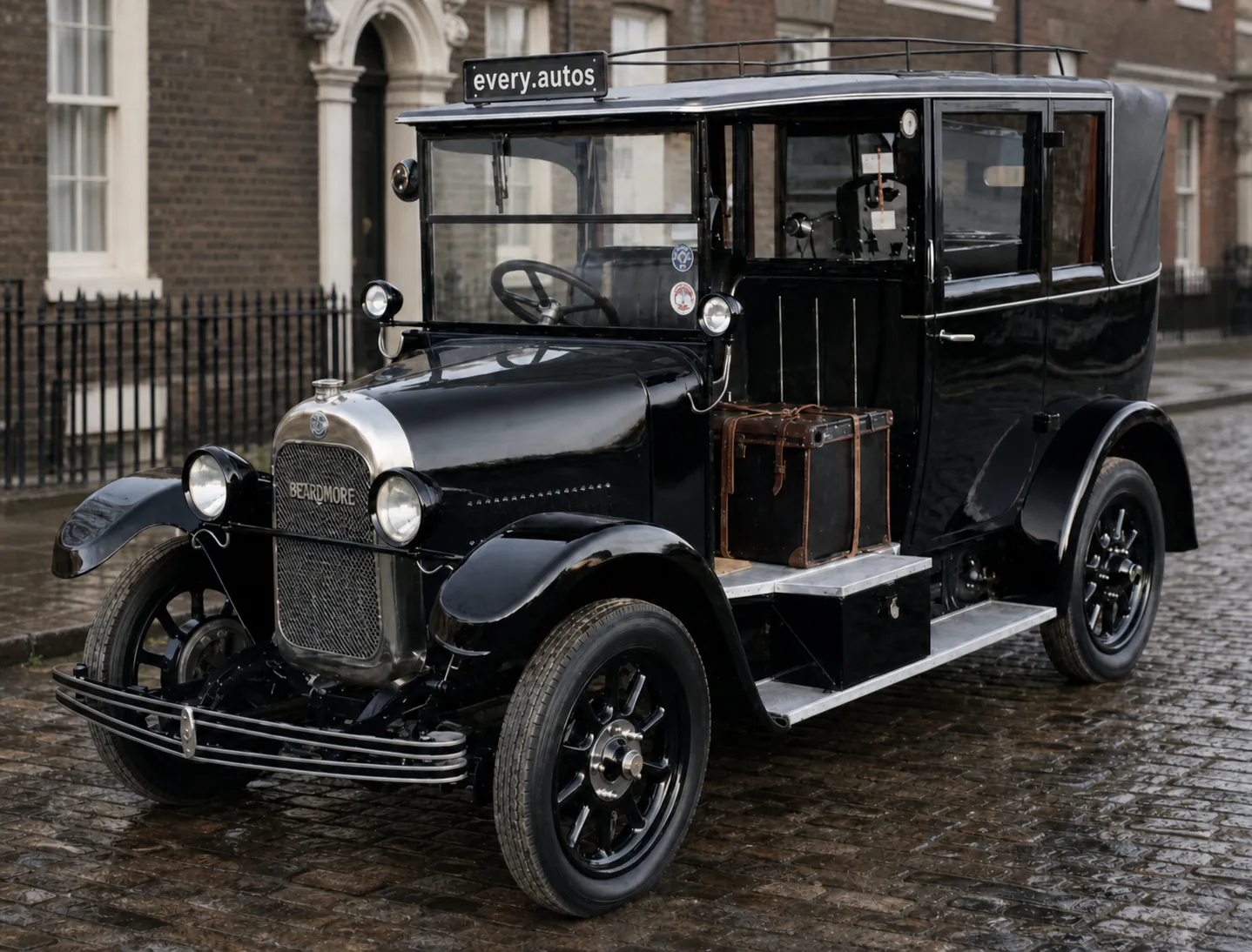
The rugged Scottish cab that became London's first new taxi after the First World War—and the most popular of the 1920s.
Beardmore began building its new London taxi at Paisley in 1919. It was the capital's first new taxicab design after the First World War and was engineered around the Metropolitan Police Conditions of Fitness, the rulebook that governed which vehicles could work for hire in London. The Mk1 name came later, after Beardmore had introduced successors; in its own moment, this was simply the new Beardmore cab.
The formula favoured hard work over novelty. A Beardmore-built 2.4-litre side-valve four powered a purpose-built chassis designed around London's taxi rules. The cab was expensive, but operators found it robust, reliable and comfortable enough to earn the nickname 'Rolls-Royce of taxicabs.' The London Vintage Taxi Association records that it became the city's most popular taxi during the 1920s.
Production ended when the all-new Mk2 arrived in 1923, but that did not end the Mk1's working life. Period history records that the last examples remained in London service until 1933. Its chassis also seeded Beardmore's Country and Colonial passenger model and a light van, making the Mk1 more than the first of seven Beardmore taxi generations: it was the foundation of the company's early road-vehicle business.
Introduced at Paisley in 1919 as London's first new taxicab design after the First World War and later called the Mk1 retrospectively. It was built to the Metropolitan Police Conditions of Fitness and became the most popular London taxi of the 1920s despite its high price, earning the nickname 'Rolls-Royce of taxicabs' for its comfort, robustness and reliability. The first example was delivered in May 1919; production ended in 1923, while the last Mk1 was withdrawn from London service in 1933. The same basic platform also supported the Country and Colonial passenger car and a light van. The 1923 Mk2 replacement used an all-new chassis shared with Beardmore light trucks and buses.
Sourced production or model lifecycle range used by the main catalog timeline.
This record contains useful sourced evidence, but it does not yet meet the reference-ready standard. Still needed: attributed imagery. Fields we cannot source stay empty rather than guessed.
No complete factory production ledger is known. A 1969 Motor Sport history reported about 2,000 Beardmore Fifteen taxis in the Coupé Company fleet and stated that the related engine had powered 1,300 London cabs by 1924; neither figure is treated as total Mk1 production.